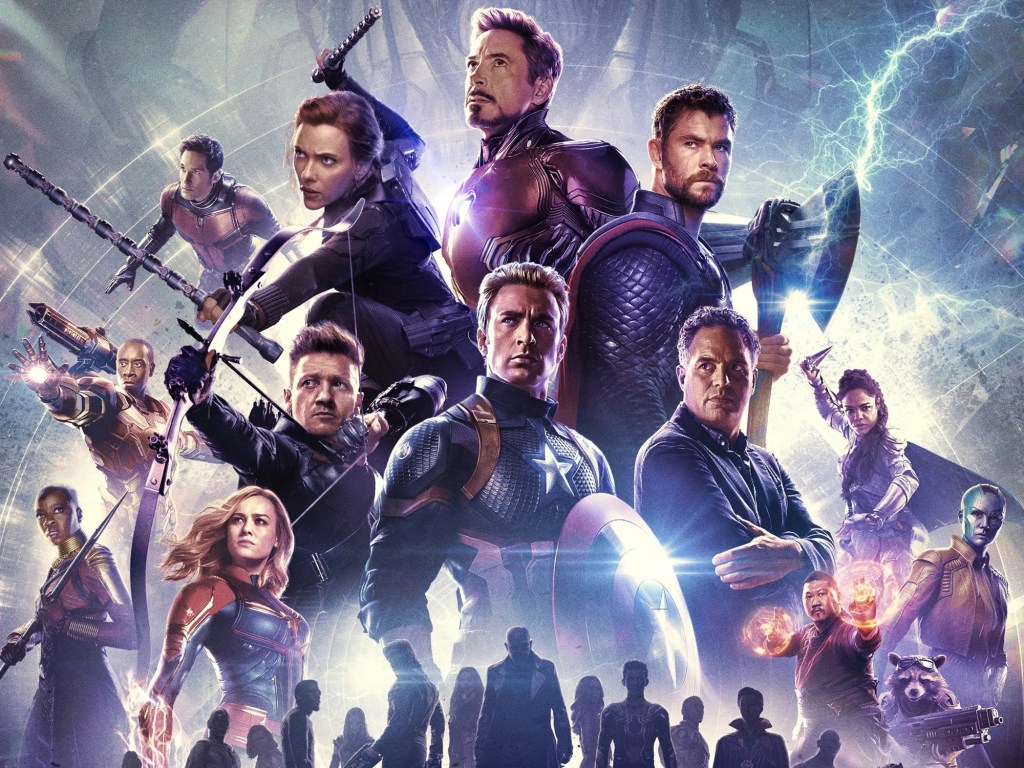
The Marvel Cinematic Universe is often discussed as a triumph of franchise management. I think it is more interesting as a lesson in product management: how do you keep dozens of talented teams moving in the same direction without making everything feel the same?
I always wanted to be a superhero. I was four when I received my brother’s hand-me-down Spidey pyjamas which, despite missing the mask (insert your own metaphor here), increased my strength tenfold as I threw pillows across the living room with ease.
I have more or less accepted that I am probably not going to become one. That dream now decomposes quietly next to professional rugby player, footballer and Rolling Stones guest guitarist. Full disclosure: I am shit at football, school-team standard at rugby and have never played guitar. Superhero was, for a while, the more credible option.
On Friday 26 April 2019 I booked a day’s annual leave to see Avengers: Endgame.
NB: If my then-fiancée asks, I attempted the garden, but the unpredictable English climate forced me to consider other options.
Eleven years and 21 films after “I am Iron Man”, Marvel had built something unusually difficult: a product ecosystem that people understood, anticipated and emotionally invested in. I had consumed the films greedily, rushing through them like ice cream just to see the bottom of the tub. I made it through Endgame’s three hours and three minutes without a piss break and came out wondering the same thing product teams ask when another company makes something look effortless: how the fuck did they pull that off?
The interesting problem is coordination
Marvel’s achievement was not simply that it made successful films. Plenty of studios can make a hit. The hard part was sustaining coherence while changing directors, writers, genres, actors, locations and creative teams across a decade.
Product organisations face the same tension. Too little alignment and every squad optimises for itself. Too much control and the work becomes centralised, slow and bland. The job is not to make every team identical. It is to make the differences add up to something recognisable.
That is why I think the MCU is useful when we talk about employee engagement, product operating models and autonomy. It is an extreme example of many teams working on different things while still contributing to a shared outcome.
1. Strategic narrative beats a slide deck
Good product strategy gives people enough context to make decisions when the product leader is not in the room. That is the real test. If every meaningful choice has to travel back up the hierarchy, you do not have alignment. You have dependency.
Marvel gave each film room to have its own tone while making the larger direction legible. A space opera could sit next to a political thriller. A comedy could sit next to something darker. The individual teams did not need to reproduce the same output. They needed to understand the universe they were contributing to.
Product teams often do the opposite. We standardise ceremonies, templates and roadmap formats, then wonder why teams still make disconnected decisions. The artefact is consistent. The narrative is not.
Alignment is not everyone doing the same thing. It is everyone understanding what their different thing is contributing to.
2. Engagement comes from meaning, not perks
I have always liked the idea behind the old NASA story: somebody asks a cleaner what his job is and he replies that he is helping put a man on the moon. Whether or not every retelling is historically pristine is almost beside the point. The story survives because it captures something true about engagement: people want to understand how their work matters.
Product organisations are particularly bad at breaking that link. Strategy happens somewhere else. Delivery becomes tickets. Success becomes velocity. A designer is asked for screens, an engineer for estimates, a product manager for a roadmap, and eventually the customer problem disappears beneath the operating machinery.
The answer is not another engagement initiative. It is to reconnect people to the problem, the user and the outcome. A team that can explain why its work matters will usually make better local decisions than one that can merely recite the quarterly roadmap.
3. Autonomy needs constraints
“Empowered teams” is one of those product phrases that becomes less useful the more often it appears on LinkedIn. Autonomy without context is abandonment. Control without autonomy is task management.
The MCU worked because there were constraints: continuity, characters, release sequencing, larger story arcs, commercial realities. Inside those constraints, individual films could still feel different. That is closer to healthy product leadership than the false choice between command-and-control and complete team independence.
The product leader’s job is to make the boundaries clear enough that teams can move quickly inside them. Which outcomes matter? What must remain consistent? Where can teams experiment? Which decisions are local, and which genuinely affect the whole system?
4. Retention matters on both sides of the product
We talk constantly about retaining users and surprisingly little about retaining organisational knowledge, relationships and trust. Long-running products are shaped by both.
Marvel’s continuity depended on more than contracts with famous actors. It depended on an ecosystem of producers, crews, creative leaders and institutional knowledge. Product organisations lose this all the time through reorganisations, project handovers and the assumption that documentation can replace context.
A team is not interchangeable capacity. When experienced people stay close to a problem, they accumulate judgement: what users mean when they say something, which shortcuts are dangerous, which constraints are real and which are folklore. That knowledge is part of the product.
5. The shared universe is the product
The cleverest thing Marvel did was make each film more valuable because the others existed. The experience compounded. That is a useful challenge for product leaders responsible for suites, platforms and multi-product businesses.
Too many product portfolios are collections rather than systems. Different navigation, duplicated data, conflicting terminology, separate customer journeys, separate incentives. The organisation calls it a platform because the products sit under the same logo.
A genuine product ecosystem creates value between the parts. Context carries. Identity carries. Data carries. The user understands where they are. The whole becomes easier to use because the pieces recognise one another.
The lesson for product management today
The MCU is not a management framework and Kevin Feige is not your Chief Product Officer. That is precisely why the comparison is useful. It gets us away from product-management vocabulary and back to the underlying problem.
How do talented groups of people make different decisions, at different times, under different pressures, and still create something coherent?
The answer is not more process. It is clearer narrative, meaningful constraints, durable context and enough trust for teams to exercise judgement.
And maybe that is the real product lesson in Marvel. The audience sees superheroes. Behind them is an operating model.


Leave a Reply